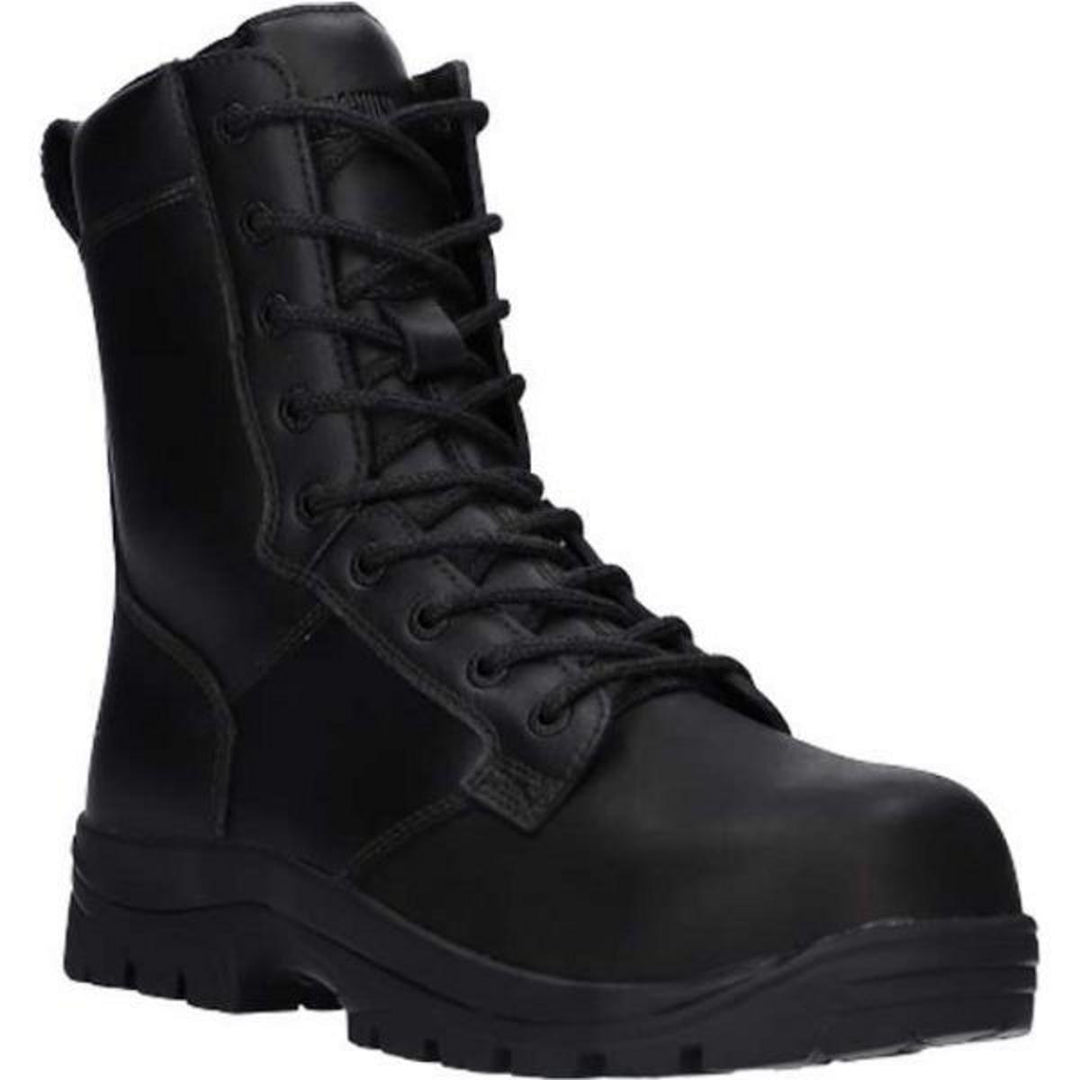
Metatarsal protection covers the bones across the top of the foot, which a steel or composite toecap does nothing for. It is specified where the risk is a dropped or rolling load rather than a crush at the toe - forestry, groundworks, yard and plant work, and anywhere heavy timber or steel is handled by hand.
Two approaches are stocked here. Most of the range carries an internal guard built into the boot: the Amblers RHEON MET lines in dealer, six-inch and eight-inch patterns, the Magnum Elite Shield MET and the Centek FS333 lace-up shoe. The Steel Flex ProtectMet is the other route - an external guard that straps over safety footwear you already own, which is the cheaper answer if only part of the job needs it.
What to check before ordering
- Fit over the instep matters more than length. An internal MET guard sits on top of the foot and takes up volume a normal safety boot does not. If you are between sizes, or wear a thick winter sock, size on the instep rather than the toe.
- Check the marking your site actually requires. MET protection is a separate part of the standard from the toecap and midsole, and a boot can be S3 without being metatarsal-rated. Read the marking on the boot, not the category name.
- An external guard does not upgrade a non-safety boot. It adds metatarsal cover to footwear that is already rated; it is not a substitute for a toecap.
- Break them in. A rigid guard needs a week of wear before a long shift. Nobody enjoys finding that out on day one.
For the wider safety and occupational range see Footwear & Accessories and Men's Boots. Waterproofing, dubbin and replacement laces are under Footwear Care and Laces.