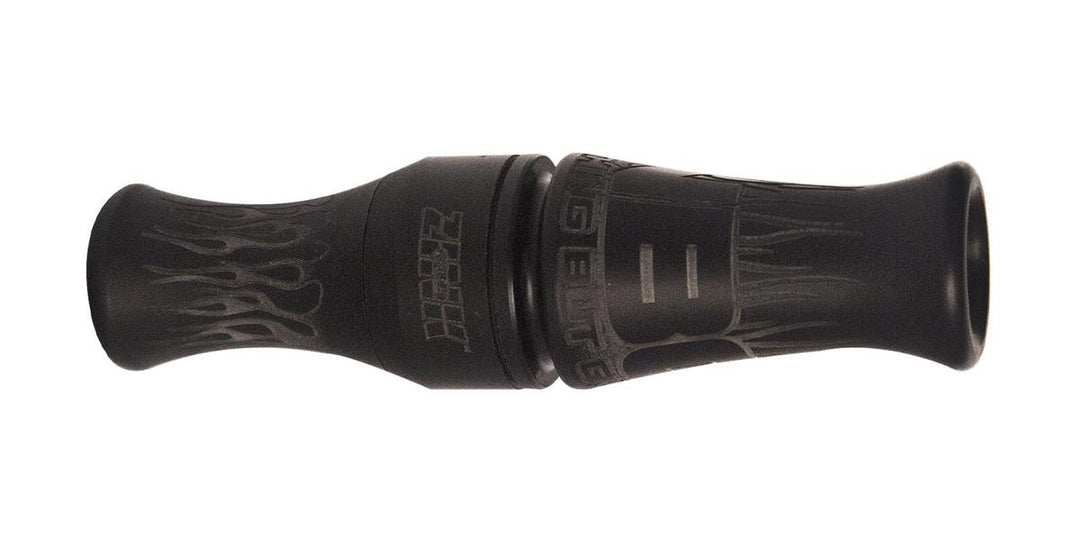
Calls for the foreshore, the stubbles and the flightpond, plus a few for corvid and pheasant work. Geese first, since that is what most of this range is built around.
Match the call to the quarry. Pinkfoot, greylag and Canada are three different voices and a call cut for one will not do the others convincingly. Illinois River build specific calls for each — a pinkfoot, the GLG-16 for greylag and the Blue Lakes for Canada. If you shoot mixed grey geese, carry two rather than trying to make one stretch.
Timber or polycarbonate. The Illinois River calls are cut from cherrywood and walnut and give a softer, rounder note that suits close work and calm conditions. Zink's polycarbonate calls — the NOS, Call of Death, Nothing But Green and ATM — are louder, harder-edged and hold their tone in wind and wet, which matters on an open foreshore. Timber also wants keeping dry; polycarbonate does not care.
Shakers. The Bisley Scotch duck and crow shakers and the Primos pheasant call need no reed technique — useful if you are starting out, or for decoying corvids where a rough note is enough. A proper single-reed duck call takes practice before you take it to the marsh; work it out at home rather than educating the birds.
Related: Deer Calls, Electronic Callers, Decoys, Pigeon Decoying, Hides.